

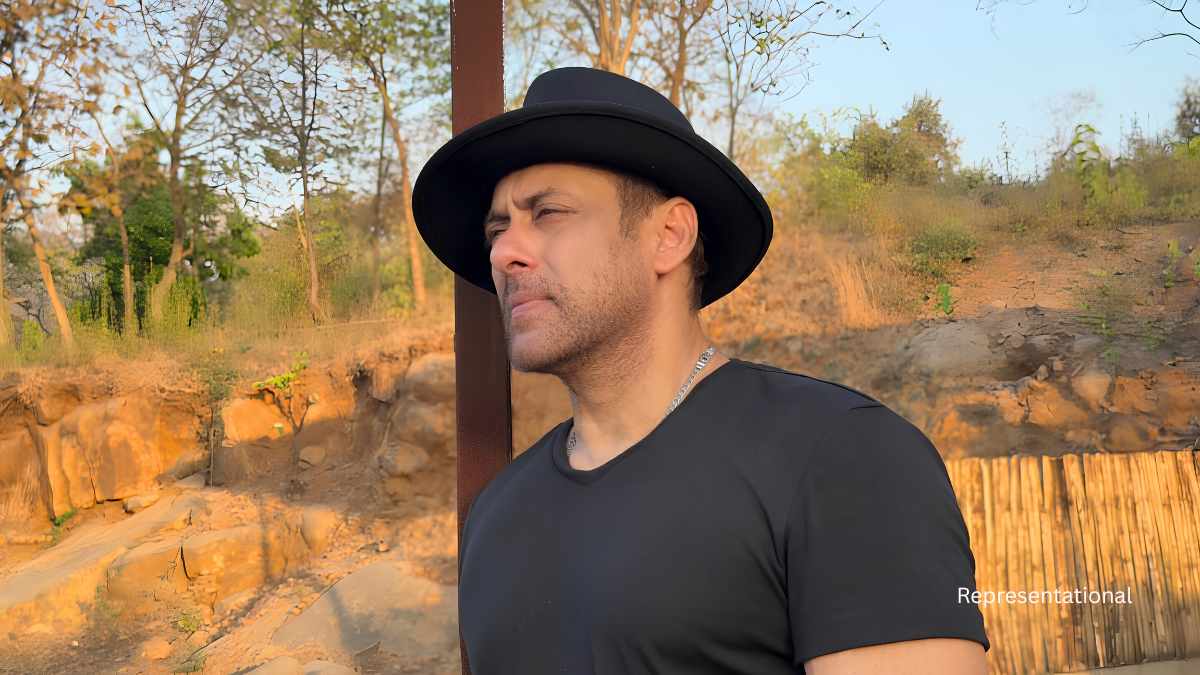
Salman Khan, one of Bollywood’s most enduring stars, has a career spanning more than three decades and over 80 films, many of them box office hits. Despite his philanthropic work and loyal fan base, his personal life has been marked by controversy. Here’s how Salman Khan managed his image during the 1990s, a decade full of legal and personal challenges, while remaining one of India’s most sought-after celebrities.
The media ban: A bold move
Few people remember that in the 1990s, Salman Khan imposed a ban on the news media. It began with an incident in 1990 on the set of his second film, “Baaghi,” where he clashed with a photographer. The photographer was taking pictures of him with his then-girlfriend, Sangeeta Bijlani, despite his request not to. Salman’s reaction led photographers to collectively ban him from being photographed. His response was to go further still… he banned the entire news media and refused to engage with them for close to a decade.
A clever strategy unveiled
There was more to his approach than a simple ban. Salman avoided addressing controversies directly by adopting an unusual strategy… staying out of the media’s scrutiny while still benefiting from its coverage. He refused news media interactions and avoided being photographed on set by freelance photographers, but he continued regular studio photoshoots with well-known Bollywood and fashion photographers such as Atul Kasbekar, Rakesh Shreshtha, Dabboo Ratnani and Subi Samuel.
Media coverage despite the ban
Even with his ban on news media, magazines of the era, including Stardust, Showtime, Cine Blitz, Filmfare and Moviemag International, kept publishing gossip stories about him. They bought exclusive photographs from these studio photographers and ran Salman on their covers, often with five or six page spreads. This meant he stayed in the news throughout the 1990s without a personal PR agency or a formal PR team. By banning news media but remaining a favourite subject for gossip magazines, and the outlets that picked up their stories, Salman effectively had the best of both worlds.
Silent success
Through this decade, Salman rarely spoke to journalists, except on the rarest occasions. His position was helped enormously by the fact that many of his films during this period were hits, which kept the media hungry for any scrap of news about him.
Lifting the ban
Salman eventually lifted the media ban in 1999, when he invited journalists to speak with him ahead of the release of “Hello Brother.” The film was directed by his brother Sohail Khan and starred Salman alongside brother Arbaaz Khan.
The Aishwarya Rai chapter
As the ban was coming to an end, Salman began a high-profile relationship with Aishwarya Rai, then reigning Miss World and one of India’s most photographed women. The relationship, which ran from 1999 to 2001, drew intense media scrutiny and marked a shift into a more public, more scrutinised phase of his career.
A shift in strategy
Salman’s approach changed as his legal troubles and controversies mounted. These included the 1998 blackbuck poaching case, in which he was accused of hunting an endangered species during the filming of “Hum Saath Saath Hain,” and the 2002 hit and run case in Mumbai, in which his car was alleged to have struck a group of men sleeping on a pavement. Add to that his public feud with Shah Rukh Khan and comments on sensitive topics, and critics increasingly pointed to his choice of formulaic films with limited artistic ambition.
Embracing professional PR
To counter these negative headlines, Salman seemed to work to build a more positive, humanitarian image, launching the Being Human charitable foundation in 2007 to support education and healthcare for the underprivileged. He also embraced social media, particularly Twitter and Instagram, to engage fans and promote his causes, and increased his participation in interviews and press conferences, presenting a more diplomatic and often humorous public persona.
Brand building and beyond
Through the 2000s and 2010s, Salman’s PR strategy shifted from evading the media to actively building his brand and fan loyalty. He became more selective in his film choices, experimenting with different genres and roles to notable critical and commercial success. Collaborations with directors including Sanjay Leela Bhansali, Kabir Khan, Ali Abbas Zafar and Prabhu Deva further strengthened his standing in the industry.
A comparison with other stars
Several Bollywood stars, including Aamir Khan and Ranbir Kapoor, have tried to limit their media exposure at various points in their careers. Neither, however, has executed a strategy as deliberate or as effective as Salman Khan’s in the 1990s.
Aamir Khan’s approach: Known as Mr Perfectionist, Aamir occasionally keeps a low profile during production to focus on his work, though he stays engaged with the media for film promotion and uses social platforms to connect with fans. His PR strategy rests largely on his reputation for quality and consistency.
Ranbir Kapoor’s approach: Ranbir has also kept media attention at a distance, particularly around his personal life, and has prioritised working with respected directors. He does not yet have the scale of fan base or brand value that Salman commands, and his strategy relies more on talent and promise than on a defined media approach.
Final take
Salman Khan’s PR story is distinctive… a mix of popularity, controversy, charisma, loyalty, brand value, humour, diplomacy, willingness to experiment and humanitarian work. Together, these have created a multifaceted public image that continues to set him apart in Bollywood.