

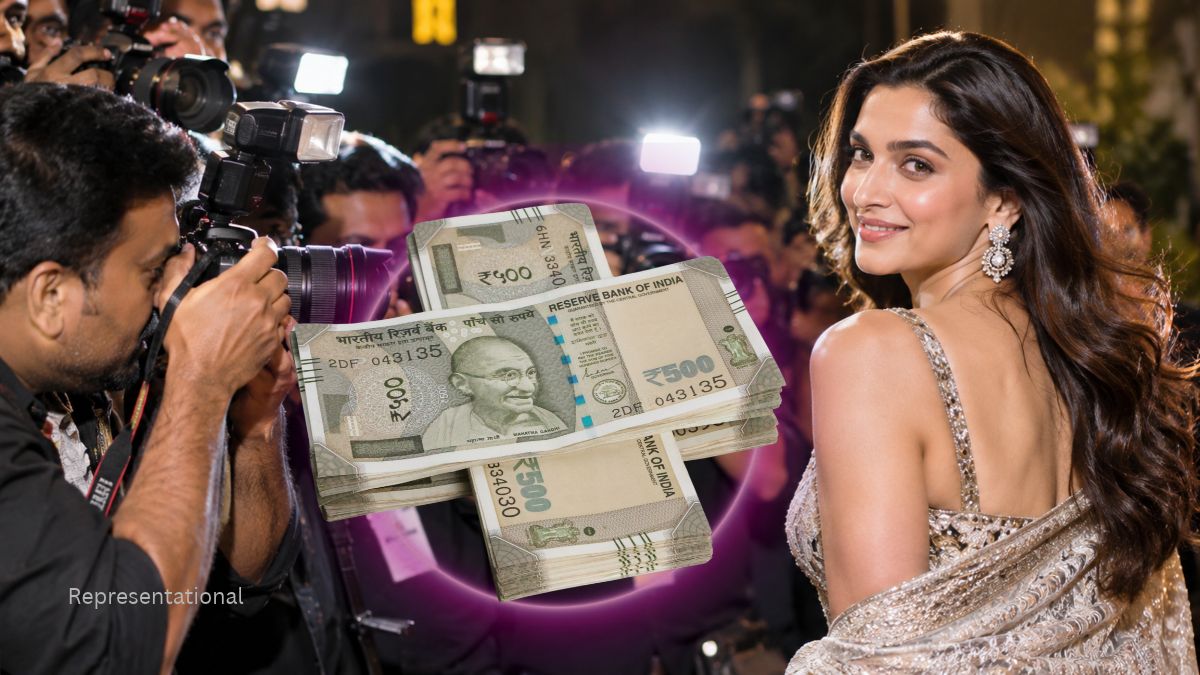
Every few months, someone asks me the same thing in a slightly different form: “Dale, do celebrities pay the paparazzi to get photographed?” The honest answer is that it is not as simple as yes or no. After nearly three decades in Bollywood PR, I have seen coverage that was bought, coverage that was earned and coverage that began as one and ended up as the other. What matters is not how the photograph was obtained. It is whether it was worth obtaining.
Not everything is a payment
It would be an oversimplification to describe every interaction between PR professionals and paparazzi as a payment transaction. Relationships, access, news value, mutual relevance, timing, exclusivity and the usefulness of the content all matter. There are also situations where a photographer has a genuine editorial or commercial reason to cover somebody without any payment being involved. The industry is much more nuanced than a simple “pay and get photographed” model.
Some relationships are entirely informal, built on professional familiarity and friendships formed over the years. Others involve specific commercial arrangements. I would not describe the industry as operating under one universal model.
What facilitation really looks like
Communication itself can facilitate coverage. Telling a photographer where somebody may be, making them aware of an interesting development, coordinating access or providing context can all make coverage easier. Many senior photographers sit together in WhatsApp groups where they exchange information about events and breaking news. PRs often keep broadcast lists too, so that one message can invite every photographer for coverage.
None of that involves a payment. It involves relationships and information.
How the paid model works
That said, there is a paid route, and I would rather explain it plainly than pretend it does not exist. If a PR wants more control, there is the option of paid media with certain senior Instagram photographers who run teams of newer photographers.
A publicist or agency pays one of the main photographers, who then deputises someone from the team to photograph the celebrity at a certain time and venue. That photographer receives strict and direct instructions on how to shoot the photographs or videos, as discussed with the publicist. The publicist is then shown the image or video, and it is published on Instagram after the publicist’s approval. That is how the paid service works.
There are also paid media and digital marketing agencies tied up with top paparazzi, who provide these services to PRs and sometimes directly to actors who seek them regularly.
Why it makes things both easier and harder
Working with paparazzi who are also publishers has two sides. It can make things easier because you are dealing directly with a distributor who understands the value of content. But it can also make things more complicated because the photographer is now thinking about editorial value, social media performance, audience engagement and monetisation all at once. There are simply more aspects to consider.
The exchange also runs both ways. A photograph can generate views, followers, platform value, brand interest and further media coverage. For a celebrity, visibility can turn into relevance, and relevance can turn into professional opportunities. For a paparazzi platform, successful celebrity content can build audience and commercial value. Both sides can be building something larger through the interaction, so it is not just money for photographs.
The five questions I ask before spending
Market demand naturally influences price. A highly sought-after celebrity generates substantially more audience interest than an unknown person. But PR budgets should not be spent simply because somebody offers coverage. Before any money moves, I ask:
- What does the client get from this?
- Does it support the client’s larger objective?
- Is this the right moment, or is the client already overexposed?
- Would organic coverage do the same job, and carry more authenticity?
- How will we judge afterwards whether it worked?
If the answer to the first question is vague, I do not proceed.
Why organic can be worth more
Organic coverage can sometimes be more valuable than arranged or paid coverage because it carries an inherent sense of authenticity. If something genuinely interesting happens and photographers capture it naturally, a good PR professional can recognise its value and build on it.
The job is not always to manufacture the story. Sometimes the smarter move is to recognise the story that has already happened and amplify it intelligently.
The risk of cheap coverage
If the visibility does not contribute to the client’s larger objective, even inexpensive coverage can prove costly for the celebrity’s reputation. A photograph that sends the wrong signal, or one that adds nothing, is not a bargain at any price.
I also would not judge any campaign simply by views or by the number of publications that reproduce it. I look at what happened afterwards. Did it reinforce the intended image? Did it create conversation? Did it increase relevance? Did other media pick it up? Did it support a professional announcement? Did it change perception? Did it generate opportunities?
The real measure of PR is not how much noise you created, but what the noise strategically achieved.