
Case study: When Imran Khan went to war with the Bollywood PR machinery


Over the past year or so, Imran Khan has been making the rounds again. Interviews, OTT announcements, candid conversations about his decade-long absence from the screen. For anyone who followed his career during its peak, the openness has been refreshing. But there is a chapter from that peak period that the PR industry may have seemingly never quite forgotten, one that might continue to linger in PR circles as a defining lesson in how public statements might reshape professional relationships in ways their authors may not anticipate.
The rise
Imran Khan made his adult acting debut in 2008 with the romantic comedy “Jaane Tu… Ya Jaane Na,” a critical and commercial success that won him the Filmfare Award for Best Male Debut. What followed was a productive run. He starred in commercially successful films including “I Hate Luv Storys” (2010), “Mere Brother Ki Dulhan” (2011), “Ek Main Aur Ekk Tu” (2012) and the action comedy thriller “Delhi Belly” (2011). Wikipedia At that point in his career, he was regarded as one of Bollywood’s more reliable young leads, and his public profile was supported, as is standard in the industry, by PR professionals who worked to keep his films visible and well-covered in the media.
The column
At some point during his peak years, Imran Khan authored a first-person column that is believed to have been published in the Hindustan Times, possibly in its HT Cafe section. The piece is said to have carried a title along the lines of “The PR Game,” though the exact title, publication and timing have not been independently verified for this article. What has been more consistently recalled across industry accounts is the substance of what he wrote: his frustrations with certain practices in Bollywood’s publicity world, specifically the fabrication of scandals and the engineering of romantic link-ups between actors as tools to generate pre-release buzz for movies. He is also said to have taken aim at what he saw as an excessive industry obsession with image management, characterizing it as a distraction from the actual work of acting.
The piece has been talked about in industry conversations over the years, while related content by Imran Khan about his discomfort with PR activity remains available across the Hindustan Times website and in interviews on other platforms.
What made it notable, beyond its content, was the moment it chose. A working actor, still building his career, publicly calling out the Bollywood PR machinery that was actively promoting him was not something the industry had seen often. Someone who had benefited substantially from professional publicity had chosen a very public forum to question its integrity.
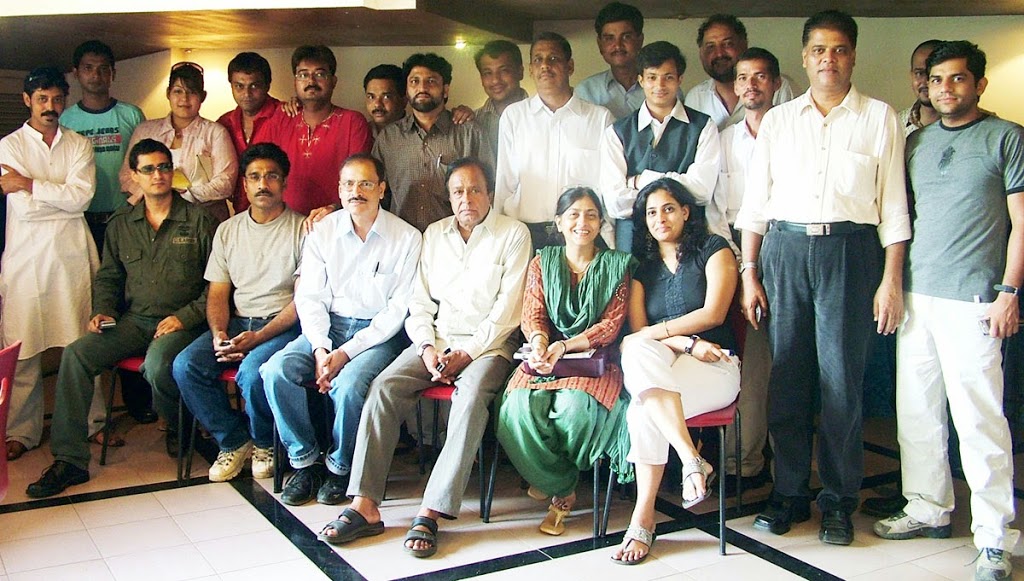
There is an additional detail that adds texture to the story. The column’s publication reportedly coincided with one of the first organized gatherings of Bollywood publicists, held at a venue in Andheri West, Mumbai, and convened by journalist Parag Chhapekar to discuss the formation of a formal association for entertainment PR professionals. Though the timing was coincidental, some of those present that day are said to have found themselves discussing the piece after the meeting.
The years that followed
After his mid-career successes, Imran Khan’s filmography was followed by a series of box-office flops and a hiatus. Wikipedia His last five films were commercial failures. DNA India The buzz around them lost momentum, and his career lost momentum with it. His final leading role was in the 2015 film “Katti Batti.”
In a Vogue interview, Imran Khan reflected on that period honestly. “The year 2016 was the worst,” he said. DNA India
Bollywood careers are complex, and no single factor defines a trajectory. Script choices, box office outcomes, shifting audience tastes and personal circumstances all played a part in where Imran Khan’s career went after 2012. The industry, however, does tend to have a long memory when it comes to professional relationships, and the PR community is no exception. Whether the 2010 column influenced the enthusiasm with which his subsequent films were promoted is something industry insiders may have debated quietly for years.
A consistent position
What is firmly on the record is that the 2010 column was not a one-off. Imran Khan’s skepticism toward PR is a consistent, long-held view. As recently as January 2026, he told the Hindustan Times: “I have worked at a time where I had a PR and a manager. Having had a taste of it and knowing what it brings to your world, I now don’t want those things.” MenaFN
Ahead of his comeback, he dismissed the idea of hiring a PR team entirely, choosing instead to seek opportunities independently, valuing artistic freedom over relentless exposure and curated hype or narratives. Box Office Worldwide
He also acknowledged the changed scenario, noting that audiences now view celebrity appearances with suspicion. “Now the public looks at everything with speculation. ‘Is this a PR stunt? What’s the angle behind it?’ I’d rather work at my own pace,” he said. Khaleej Times
These are principled positions, and he has held them publicly for over 15 years. The industry, however, is not simply an idea. It is a web of relationships, and consistently signaling distrust of a professional community that gatekeeps a significant portion of media access is something to ponder upon.
The comeback
Imran Khan is set to return as a lead actor in “Adhure Hum Adhure Tum,” a romantic drama directed by Danish Aslam for Netflix, co-starring Bhumi Pednekar and Gurfateh Pirzada. Evrim Ağı He has described the film as deeply personal. “Adhoore Hum Adhoore Tum is a character story approached from where I’m in my life. I’m a divorced man in my 40s and a parent. A story with such shades is what makes it interesting to me.” MenaFN
There is something genuine in that framing, and there is real anticipation around his return. Whether he tackles the industry’s ecosystem differently this time, on his own terms or otherwise, will be watched with interest.
The larger point, visibility and momentum
Imran Khan’s story is not really about one column or one community’s reaction to it. It is about how professional ecosystems function, and how the relationships within them may quietly determine outcomes that are never fully visible from the outside. In Bollywood, where visibility and momentum are currency, the people who manage that visibility are not peripheral. They are structural. An actor can hold strong views about how that system works. But holding those views publicly, repeatedly and early in a career, while simultaneously depending on that same system for professional survival, is a tension that should not be completely ignored.
In an industry where perception is everything, PR professionals do not simply manage images, they craft them. That is a reality Imran Khan might have always understood intellectually. Whether his career reflects the cost of publicly refusing to make peace with it is a question the industry has been mulling for over a decade.
Disclaimer: This article is opinion and industry commentary based on observations, industry sources, publicly available information and media reports. All analysis represents the author’s observations.